
How Much Does SEO Cost for a Small Business in 2026?
If you own a small business and start looking into SEO, you will probably notice one confusing thing very quickly. One consultant may tell you that a small monthly budget is enough to get started, while another agency may insist that anything below a much higher amount is not worth serious discussion.
At first glance, this looks strange. Both companies talk about the same service. Both promise better visibility in Google. Both use similar words: audit, keywords, content, backlinks, technical optimization. Yet the prices can be completely different.
After more than twenty years of working with websites, I have become very careful with universal answers to questions about SEO pricing. I have seen modest budgets produce strong results when the website had clear potential and the competition was weak. I have also seen much larger budgets fail to deliver the expected outcome because the website itself had deeper problems.
That is why the real answer to the question “How much does SEO cost?” is rarely just a number. The better question is different: what exactly does your website need in order to become a real source of new customers?
Need Website Promotion?
Why SEO Pricing Is So Difficult to Compare
SEO is not a standardized product. When one company offers “SEO for $300 per month” and another offers “SEO for $2,000 per month,” they may be talking about completely different scopes of work.
For one website, SEO may begin with fixing basic technical issues, improving service pages, and setting up proper analytics. For another, it may require a long-term content strategy, expert articles, high-quality backlinks, conversion improvements, and ongoing technical work.
This is why comparing SEO prices without looking at the website, niche, and business goals can be misleading. A small local service company and a healthcare provider in a competitive city may both want more leads from Google, but the amount of work required to achieve that result can be very different.
Can SEO Work on a Small Budget?
Surprisingly, yes. But not for every business and not in every niche.
A few years ago, we worked with a manufacturing company that operated mainly in a local market. The competition was not especially strong, and the website already had enough basic information about its services. The main problem was not the lack of a huge SEO budget. The problem was that the site had never been properly optimized.
Most of the work was focused on several practical tasks:
- improving the structure of service pages;
- fixing technical issues that limited indexing;
- strengthening internal linking;
- optimizing pages for local search queries;
- adding missing service information where users needed more clarity.
There was no aggressive link-building campaign. There was no massive production of new articles. From the outside, the work looked quite modest.
Still, after several months, the website started receiving more organic traffic, and some important local queries moved into the top part of Google’s results. This case was a good reminder that a small budget can work when the niche is narrow, the competition is realistic, and the first priority is proper internal optimization.
Does this mean that a small budget is enough for every website? Of course not. But it does show that sometimes the biggest problem is not the size of the budget, but the absence of basic SEO work.
When a Small Budget Produces Surprisingly Strong Results
Another project that comes to mind was connected with a very specific agricultural niche. At first, I was not sure whether a modest SEO budget would be enough to make a visible difference. The market was small, the audience was narrow, and the search demand was limited.
But after looking at the competitors more carefully, the situation became more interesting. Many of them had websites that had not been seriously updated for years. They had some authority simply because they were present in the market, but they were not actively developing content or improving their website structure.
In this case, the strategy was simple but consistent. We focused on new topic-based pages, regular content updates, better internal linking, and technical quality. Instead of trying to compete everywhere at once, the site gradually covered the questions that real potential customers were asking.
After several months, the website started receiving traffic from most of the important search terms in its niche. What surprised me most was not the growth itself, but how little work some competitors had done on their own websites. Many business owners assume that everyone above them in Google is actively investing in SEO. In reality, this is not always true.
What SEO Budgets Typically Look Like in 2026
The numbers below should not be treated as fixed SEO prices. They are only rough ranges that help explain how the level of competition and the type of business usually affect the budget.
| Monthly SEO budget | Typical business type | What you can realistically expect |
|---|---|---|
| Under $250 | Local services, small niche businesses, individual professionals | Basic optimization, technical fixes, small content updates, local search improvements |
| $250–$750 | Small businesses, local eCommerce projects, service companies | Ongoing content work, new landing pages, competitor analysis, gradual organic growth |
| $750–$2,000 | Competitive local markets, growing online stores, B2B companies | Regular content, technical SEO, backlinks, structure improvements, conversion work |
| $2,000+ | Healthcare, legal, finance, national or highly competitive projects | Comprehensive long-term SEO strategy, expert content, authority building, continuous optimization |
These ranges are not meant to replace a proper SEO audit. In practice, I have seen businesses outperform stronger competitors with modest budgets simply because their websites were better structured and easier for users to understand. I have also seen companies spend much more and still struggle because their pages did not provide enough value.
Typical SEO Budget by Competition Level
Typical SEO budgets for small businesses
Based on practical experience with small business websites in different levels of competition.
small service providers, individual professionals, narrow local searches
local shops, service companies, small eCommerce projects
B2B services, online stores, regional or national competition
healthcare, legal, finance, complex expert niches
This kind of visual comparison is useful because many business owners think about SEO in the wrong way. They ask, “How much does SEO cost?” before asking how difficult their market actually is. In reality, the level of competition often matters more than the business size itself.
Why Some Businesses Need Much Larger SEO Investments
There are industries where even a budget of $1,500–$2,000 per month may not be excessive. Healthcare is one of the clearest examples.
In one medical project I worked on, meaningful SEO growth required a much stronger budget over several months. The reason was not that the website needed some magical SEO trick. The reason was that the niche itself was difficult. The competition was strong, the content had to be reliable and expert-driven, and trust signals mattered much more than in ordinary local service niches.
For such websites, SEO usually includes much more than technical optimization. It may require expert articles, detailed service pages, reputation signals, high-quality backlinks, content updates, and careful work with user intent. In medical, legal, and financial topics, Google also tends to treat quality and trust with special attention.
This is why business owners should not compare SEO budgets without comparing business models. A monthly SEO budget that looks too high for a small local company may be perfectly reasonable for a healthcare provider if one new client or patient brings significant revenue.
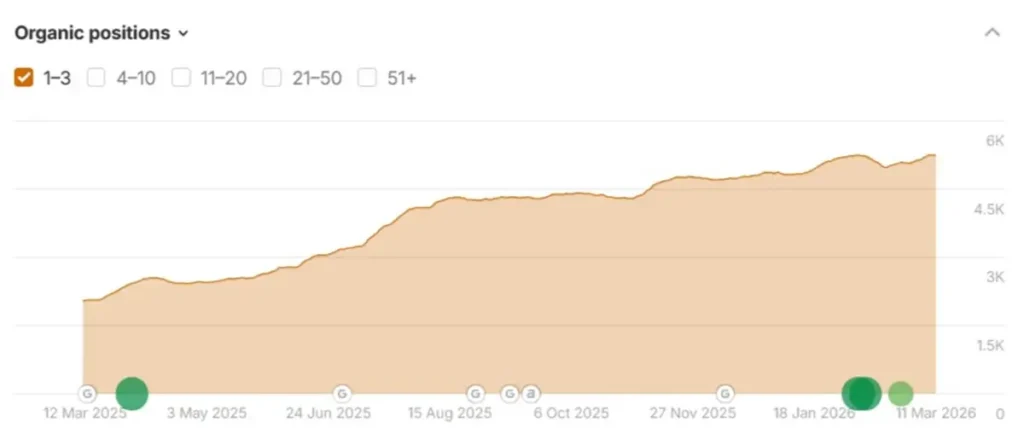
What Has Changed Since AI Became Part of SEO?
One of the most common questions I hear today is whether artificial intelligence has made SEO cheaper. The honest answer is: partly yes, but not in the way many business owners expect.
AI has definitely changed the workflow. Research is faster. Content planning is faster. Competitive analysis is faster. It is now much easier to collect ideas, build outlines, compare pages, and prepare the first draft of an article. Some tasks that used to take hours can now be completed much more quickly.
However, this does not mean that SEO has become fully automated or that expertise is no longer needed. Over the past year, I have reviewed many websites filled with AI-generated content. At first glance, some of them looked impressive. The articles were long, the keywords were present, and the headings followed familiar SEO patterns.
But after reading those pages more carefully, the problem became obvious. Most of them lacked real experience. They did not contain practical examples, business context, or insights that could help a real customer make a decision. The content existed, but it did not add much value.
This is why I see AI as a productivity tool rather than a replacement for SEO specialists, developers, or content creators. It can help reduce time spent on routine tasks. It can support research and structure. But it still needs human judgment, editing, fact-checking, and a real understanding of the business behind the website.
In my experience, the best results come when AI is used to speed up the process, while the final content is shaped by someone who understands the niche, the customer, and the actual problems the website is trying to solve.
Need to understand a realistic SEO budget for your website?
We can review your website, competition, current search visibility, and suggest where SEO should begin: technical improvements, content, structure, backlinks, or conversion optimization.
The Most Common SEO Mistakes Small Businesses Make
Over the years, I have seen many different SEO projects, but the same mistakes appear again and again. They are not always technical. Very often, they come from wrong expectations or from focusing on the wrong metric.
Choosing an SEO Provider Based Only on Price
The cheapest SEO proposal is not always the best value. Sometimes a low price simply means a very limited scope of work, generic reports, outdated tactics, or almost no real involvement in improving the website.
This does not mean that expensive SEO is always better. It means that business owners should look carefully at what is actually included. A clear plan is usually more important than a beautiful commercial proposal.
Expecting Results Within a Few Weeks
SEO is slower than paid advertising. Google needs time to crawl changes, evaluate new pages, understand improved structure, and reassess the website. In many niches, the first visible results appear after several months of consistent work.
If a business needs leads immediately, paid search or another direct-response channel may be a better short-term solution. SEO is usually more valuable as a long-term investment.
Focusing Only on Rankings
Rankings matter, but they are not the final goal. I have seen websites reach good positions for selected keywords and still receive very few leads. I have also seen websites improve business results without reaching the first position for every target query.
For a business, the most important indicators are leads, phone calls, sales, and the quality of traffic. Rankings are useful, but they should not be the only way to judge success.
Ignoring Website Quality
Sometimes the problem is not SEO at all. A slow, outdated, confusing, or unconvincing website can struggle to convert visitors even if traffic increases.
SEO can bring people to the website, but the website itself must help them make a decision. Clear service pages, trust signals, case studies, reviews, photos, and simple contact options often matter just as much as search rankings.
Underestimating Content
Many small businesses still treat content as something optional. In reality, helpful content often becomes one of the strongest sources of organic traffic. Articles, answers to common questions, case studies, and expert explanations can all become entry points from Google.
This is especially true when customers need time to understand the service before contacting a company. In such cases, a blog is not just a place for news. It can become part of the sales journey.
Buying Too Many Low-Quality Backlinks
Backlinks are still important, but quantity alone is not enough. A few relevant mentions from trustworthy websites can be more useful than dozens of weak links from unrelated sources.
For small businesses, this matters even more because the budget is limited. Every link-building decision should be careful. A link should make sense not only for search engines, but also in the context of the business and the topic.
The Most Expensive SEO Lesson I Ever Learned
One of the most frustrating projects I remember involved a travel website with thousands of pages. At first, the situation looked promising. The website was large, the topic had demand, and there seemed to be many opportunities for growth.
We improved the main landing pages, worked on backlinks, and tried to strengthen the structure of the website. On paper, many of the actions were correct.
But the results remained weaker than expected.
After some time, the reason became much clearer. A large part of the website consisted of content imported from other sources. The pages existed, but many of them did not offer enough unique value. They were not strong enough to compete seriously, no matter how much technical optimization or link-building work was added around them.
SEO can help a good website become more visible. It cannot turn a weak website into a strong one through optimization alone.
This case changed the way I look at SEO budgets. Since then, I have been much more careful when a business wants to invest in promotion before fixing the foundation of the website.
When SEO Might Not Be the Right Investment
This may sound unusual in an article about SEO, but sometimes I advise businesses not to start SEO immediately.
If the website is not ready, it may be better to improve the structure, content, speed, design, and conversion elements first. If the business needs customers this month, paid advertising may produce faster results. If the company works entirely through referrals and does not plan to grow, SEO may not be the first priority.
SEO becomes valuable when a business is ready to treat its website as a long-term marketing asset. Without that mindset, even a reasonable budget can be wasted.
Related Topics Worth Exploring
Online stores often face a unique set of SEO challenges. Product variations, category structures, filters, and duplicate pages can all limit organic growth even when the budget is sufficient. I explored these issues in more detail in my article about eCommerce SEO optimization.
Sometimes the issue is not the budget at all. I have worked on projects where rankings were limited by technical mistakes rather than a lack of investment. One common example is when Google chooses a different page than the one the website owner intended to rank. I discussed this situation in my article about canonical URL problems.
For multilingual websites, SEO becomes even more complex. A technically correct implementation does not always guarantee that the right language version will rank in the right country. This is one of the reasons I wrote a detailed guide on hreflang implementation and international SEO.
What Would I Recommend to a Small Business Today?
If a small business asked me today what SEO budget to start with, I would not begin with a number. I would first look at the website, the market, and the business model.
In many cases, I would suggest starting with a realistic monthly budget that allows for consistent work rather than trying to do everything at once. For some companies, that may mean basic optimization and a few carefully prepared pages. For others, it may mean a more serious strategy with content, technical improvements, and link-building from the beginning.
The worst option is usually not a small budget. The worst option is an unclear budget with no priorities. A business can get good results from modest SEO work if the strategy is focused. But even a large budget can disappear quickly if nobody understands what problem the website actually needs to solve.
Final Thoughts
If you are still looking for a single answer to the question of how much SEO costs for a small business, I understand. Every business owner wants clarity before investing money.
But the reality is that the right SEO budget depends on the niche, competition, website quality, business goals, and the value of each new customer. For one website, a modest budget and proper internal optimization may be enough to start growing. For another, even several thousand dollars per month may only be the beginning of a long-term strategy.
Before asking how much SEO costs, it may be more useful to ask a different question: what needs to change for your website to become a reliable source of new business over the next year?
In my experience, that is where the real answer usually begins.
